
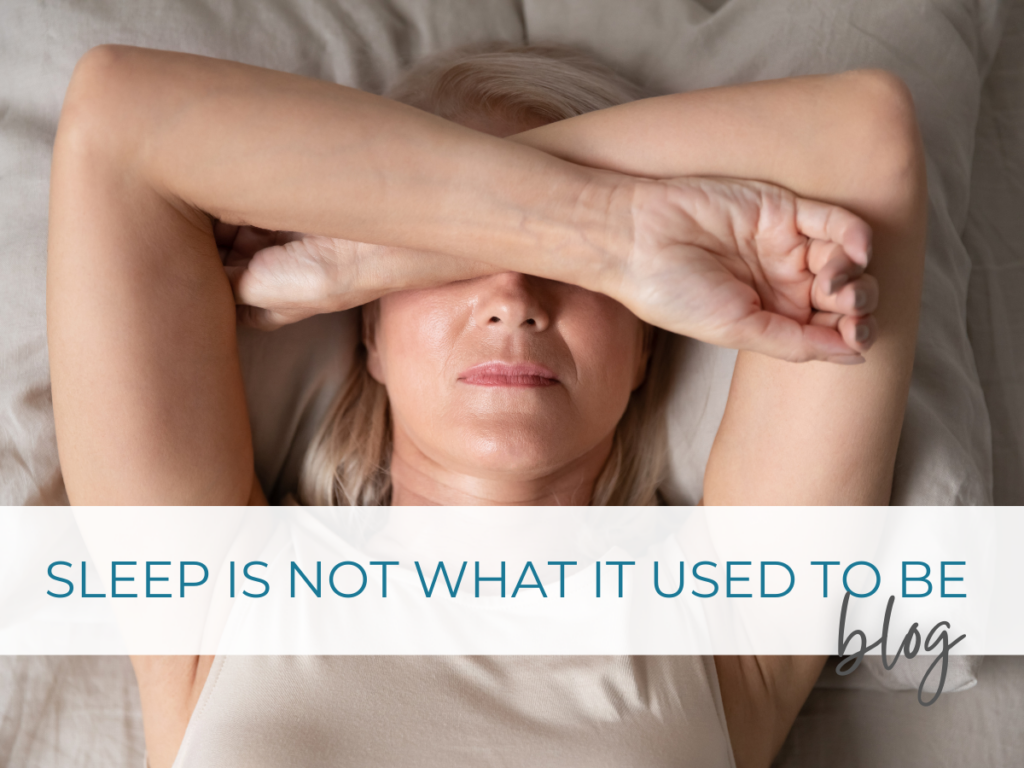
Sleep Is Not What It Used to Be: Understanding Sleep Changes in Perimenopause
If your body has started to feel unfamiliar: your sleep off, your mood shifting, your energy dipping, your weight changing—you’re not alone.
And you’re definitely not imagining it.
This is one of the most common conversations happening in clinic right now. Women are noticing changes, asking questions, and often not getting clear answers.
What’s Actually Happening to Your Sleep
Perimenopause is a time of hormonal fluctuation, not decline. Estrogen and progesterone don’t gently taper—they swing.
And those swings directly impact sleep.
Progesterone, often referred to as the “calming” hormone, has natural sedative effects. As levels become inconsistent, that steady, grounded feeling can disappear—making it harder to fall and stay asleep.
Estrogen plays a role in regulating body temperature, serotonin, and melatonin. When estrogen fluctuates, so does your ability to maintain deep, restorative sleep. This is why night sweats, frequent waking, and lighter sleep become more common.
At the same time, your cortisol rhythm—your stress hormone—can start to shift. Instead of being low at night and high in the morning, many women find themselves “wired and tired,” with a second wind late in the evening or a cortisol spike in the early hours.
Common Sleep Changes in Perimenopause
This phase doesn’t look the same for everyone, but there are patterns we see often in clinical practice:
- Trouble falling asleep, even when you’re exhausted
- Waking between 2–4 a.m. and struggling to fall back asleep
- Night sweats or feeling suddenly overheated
- Restless, light, or fragmented sleep
- Waking unrefreshed, regardless of how many hours you were in bed
- Increased anxiety or a racing mind at night
Many women are told this is “just stress” or “part of aging.” But that explanation misses the bigger picture.
Why Sleep Matters More Than Ever
Sleep is not a luxury—it’s a foundation.
During this phase of life, quality sleep plays a critical role in:
- Hormone regulation
- Metabolic health and weight management
- Cognitive function and memory
- Mood stability and resilience
- Cardiovascular health
When sleep suffers, everything feels harder. Cravings increase. Patience decreases. Brain fog settles in. And the cycle reinforces itself.
When to Look Deeper
If sleep disruption is persistent, severe, or impacting daily function, it’s worth a deeper look.
This may include:
- Hormone assessment
- Cortisol rhythm testing
- Thyroid evaluation
- Screening for sleep apnea (often under-recognized in women)
Sleep is a signal. Not something to ignore or push through.
If your sleep has changed, there’s a reason.
Perimenopause can disrupt the very systems that once made sleep feel effortless—but that doesn’t mean you’re stuck with it.
With the right approach, sleep can improve. Energy can return. And those 3 a.m. wake-ups don’t have to be your new normal.
You deserve to feel rested in your body again
Check out our menoPowered website and blog!
And be included in our Power Pause Newsletter – sign up here!