
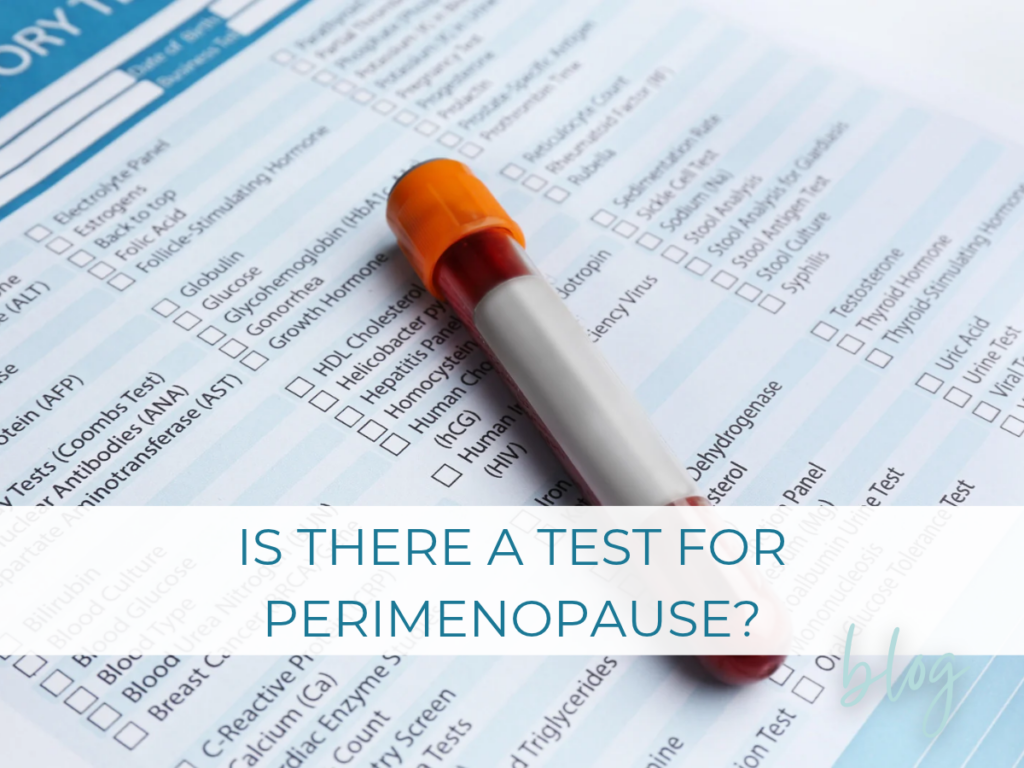
For most women over 45, there isn’t a single blood test that confirms perimenopause. Hormone levels swing widely from week to week during this stage, so one “normal” result doesn’t rule it out. Perimenopause is usually identified from your age, cycle changes and symptoms. Blood tests are still useful: they can rule out other causes and show how this transition is affecting you.
One of the most common things I hear in my office is, “I asked for my hormones to be tested and they came back normal, so I guess it’s not perimenopause.” Many women are then left wondering why they still don’t sleep, why their periods have changed, and why they feel like a different person. A normal result is often not the end of the story.
Why a single hormone test can mislead
In perimenopause, your ovaries don’t wind down in a straight line. Some months you ovulate and some you don’t. Estrogen can spike higher than it ever did in your 30s, then drop sharply a few weeks later.
FSH (follicle-stimulating hormone), the test most people have heard of, rises and falls along with this. You can have a perimenopausal-range FSH one month and a completely ordinary one the next. That’s why UK and international menopause guidelines advise against using FSH or estrogen levels to diagnose perimenopause in women over 45 with typical symptoms. Canadian guidance agrees: a 2024 article in the Canadian Medical Association Journal notes that no lab or imaging tests are needed to diagnose perimenopause after age 40, because FSH levels vary so much and there are no meaningful cut-off values.
The same caution applies to at-home urine or saliva hormone kits. They capture one moment in a system that changes constantly.
How perimenopause is usually identified
For most women, the clearest evidence is your own story:
- Your age: it can start as early as your mid-30s
- Cycle changes: periods closer together, further apart, heavier, lighter or skipped
- Typical symptoms: hot flashes, night sweats, broken sleep, new anxiety or irritability, brain fog, joint aches, vaginal dryness
Tracking your cycle and symptoms for a few months is one of the most useful “tests” there is. If your symptoms look different from what you expected, Wait… THAT Can Be Perimenopause? covers the surprising ones.
Tests that help us understand your perimenopause
No single test confirms (or denies!) perimenopause, but the right bloodwork shows how this transition is affecting you, what else might be adding to your symptoms, and where to focus. Depending on your age, cycle and symptoms, your practitioner may look at:
- Thyroid (TSH, free T4, and sometimes thyroid antibodies): thyroid problems become more common in midlife and cause many of the same symptoms. Read more in Is It Perimenopause or Your Thyroid?
- Iron stores (ferritin) and a complete blood count: heavier or more frequent periods are common in perimenopause and can leave you low in iron, which adds to fatigue, hair shedding and brain fog.
- Vitamin D and B12: low levels can affect energy, mood and bone health, and vitamin D runs low for many Calgarians by mid-winter.
- Blood sugar (fasting glucose, fasting insulin and HbA1c): shifting hormones can change how your body handles sugar, which shows up as cravings, energy crashes and weight around the middle.
- Cholesterol and other heart-health markers: LDL cholesterol often rises through the menopause transition, so a baseline now helps us track your heart health over time.
- FSH and estradiol: most helpful if you’re under 45, if your periods have stopped, have an IUD, have had a hysterectomy, ablation or uterine artery embolization, or if the picture is unclear. They can help rule out early menopause, but in women over 45 a single result can’t confirm or rule out perimenopause.
What about the DUTCH test? Patients often ask about the DUTCH test, a dried urine hormone test ordered and interpreted by your practitioner, unlike the over-the-counter kits above. It can’t confirm perimenopause, for the same reason a single blood test can’t: your hormones are shifting from week to week. What it can do is give us clues about what your body does with hormones, whether you’re making them or taking them. It shows how estrogen, progesterone and cortisol are being broken down (metabolized). That can be helpful when we’re planning care or adjusting hormone therapy, but it isn’t needed for everyone, so we’ll talk through whether it would change your plan before ordering it.
What helps
- Start a simple tracker today. Note period dates and flow, sleep, hot flashes, mood and energy. Bring two or three months of notes to your visit.
- Gather your past results. Older bloodwork shows what’s normal for you, which makes new results easier to read.
- Skip the kits. Put the money toward a visit where someone can interpret your symptoms and any testing together.
- Don’t wait for a “positive” test to get support. Sleep, mood and hot flashes can be addressed based on symptoms. Options range from lifestyle and nutrition to hormone therapy, depending on your health history.
When to see someone
Book a visit if your symptoms are affecting your sleep, work or relationships, or if you’ve been told your results are normal but you still don’t feel like yourself.
Please see your family doctor promptly if you have bleeding after 12 months without a period, very heavy bleeding (soaking a pad or tampon every hour or two), bleeding between periods or after sex, or periods that stop before age 40. If you’re in crisis or thinking about harming yourself, call or text 9-8-8 or go to your nearest emergency department.
Getting answers in Calgary
At Grassroots, our naturopathic doctors take the time to hear your full story and use testing where it will actually change your plan. Several of us have additional training in menopause care. Learn more on our perimenopause and menopause care page, or book a 15-minute discovery call or an initial visit HERE.
Related reading: Why Seeing a Menopause Specialist Can Matter · Sleep Is Not What It Used to Be
This article is for educational purposes only and is not a substitute for individualized medical advice, diagnosis, or treatment. Speak with a qualified healthcare professional about symptoms or health concerns. If you are experiencing a medical emergency, call 9-1-1.